


Step 2 Amateur to Professional Artist
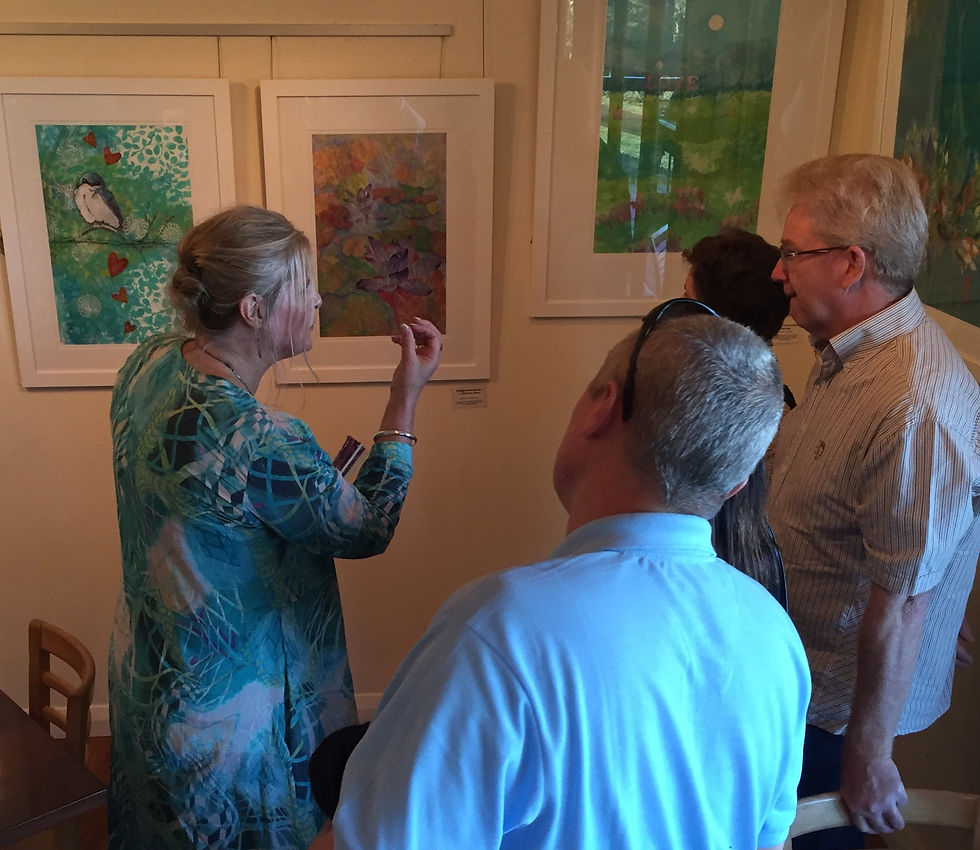
So you’ve had your work exhibited in a few of your local art society’s exhibitions, you’ve had some good feedback and have even made some sales. Well done you!

Now what?
It’s time to take a critical view of your body of work. Over the last few years you will have probably amassed a quite diverse collection of paintings, sculptures or drawings with a diverse range of subjects.
Firstly, let me say, that any work where you have followed an instructor’s composition or photograph is subject to copyright and you are not permitted to sell or display in a public forum as your own. (Of course you can post your work on social media, but you must give credit to the instructor ie. ‘My Painting of 'xyz' from a composition or photo by... ').
Ok, so looking at your work can you see a theme?
Are they all landscapes? Portraits? Abstracts?
Or is it a mish-mash (technical term 😄) of many different subjects and styles?
It is now time to narrow your focus.
Answer the following questions:
What is your favourite piece or subject?
What do you like about it?
How does it differ from your other work?
Now, no answering ‘because I like it’, ‘because it’s good’.
What I want you to do is think about it in terms of the elements of design.
Is it the composition that you like? Is it the colour, use of line, shapes, tonal value, textures, scale or movement of the piece that you like?
Answers to these questions will help you to critique your own work and to find out what you like so that you can make more of the same type of work.
Remember we are trying to narrow your focus so that you can create a body of work to exhibit, not to restrict your artistic expression. (If, like me, you like creating a diverse number of subjects, I’ll show you a way in an upcoming blog, how to get around that so you can make a cohesive exhibition).
So you‘ve chosen your subject and decided in what medium you’d like to express it and you’ve chosen what elements of design you’d like to incorporate in to your work.
For example, your subject is landscapes in acrylic paint using a horizontal composition, textures, colours and tonal values.
Next I’d like you to think of what it is you’d like to express about your subject.
For example with landscapes is it the quiet of the early morning light that calls to you? Is it the turbulent sea or the never ending sky that speaks your name?
Find something that you’d like to express about your subject.
If you are having difficulties, start with my free Creativity Meditation, that will relax you and help you open the door to your umlimited creative power.
Or you could pull out your thesaurus (a dictionary type book that has synonyms and antonyms of words, also available free online) to help you explore different feelings. A thesaurus is great for sourcing titles of your work too.

Or you could write in your journal in a ‘stream of consciousness’ to discover what it is you want to say in your work. Start writing whatever comes into your mind and just keep going, you’ll be surprised with what you write.
So, let’s recap.
Ask the questions about your favourite piece of work in terms of the elements of design. Choose your subject, medium and what it is you want to express about that subject and get creating!
Next time we’ll talk more about getting your work ready for your first solo exhibition.
And remember, if you have any questions or are stuck go to my ArtStart Mates Page leave your question and I’ll happily answer it for you.

Me www.artbyderryn.com.au
Free Classes & info or courses www.artbyderryn.com.au/artstart
My Facebook Page www.facebook.com/Artbyderryn1
My Instagram Page www.instagram.com/art_by_derryn

Comments